Hatching and Cross-Hatching Techniques for Pen Plotting
A pen plotter cannot print continuous grayscale. It creates tone with path density, direction, and layering, so the best results come from simple tonal decisions, closed shapes, and disciplined pathing.
What Hatching Actually Does
Hatching uses parallel lines to suggest value. Cross-hatching adds another set of lines at a different angle when one layer is not enough.
On a pen plotter, that matters because the machine only follows paths. There is no automatic gray fill hiding underneath the artwork. If you want a darker shape, you have to draw more strokes inside it.
That gives you three main controls: spacing, direction, and layer count. Tighter spacing reads darker. Line direction affects form. Extra layers deepen shadows, but they also multiply stroke length.
The cleanest plots usually come from restraint. Leave highlights open, keep mid-tones simple, and use the densest patterns only where the drawing genuinely needs more separation.
Quick mental model
Adjust spacing first. Add a second hatch layer only after a single layer no longer gives you enough contrast.
When Single Hatching Is Better
Single-direction hatching is usually the better default for plotters. It reads faster, plots faster, and is easier to optimize than stacking multiple layers everywhere.
Cross-hatching is most useful in core shadows, recessed details, and small areas that need a stronger value jump. Use it as an accent, not as a blanket texture.
There is no universal best angle. The right choice is the one that stays readable next to your outlines and helps the subject feel solid. A cylinder, face, leaf, or drapery fold often looks better when the lines follow the form instead of ignoring it.
Plot time warning
A second hatch layer can roughly double the amount of drawn line in that region. If the extra darkness is subtle on paper, it was probably not worth the extra plotting time.
Closed Shapes, Holes, and Edges
Most hatch tools expect closed vector shapes. If a region is open, do not expect a clean fill or predictable clipping.
Counters, holes, and overlapping shapes need clean geometry before you generate the hatch. If those relationships are wrong, the plot can double-fill areas that should stay open or leave accidental gaps.
Inset the hatch slightly when your pen spreads, feathers, or pools at the turns. A tiny margin at the edge is safer than a perfectly flush fill that bleeds past the outline on paper.
Supporting photo
A useful swatch-sheet photo shows one pen, one paper, three spacing tests, one cross-hatch test, and handwritten notes. That kind of reference makes the advice immediately practical.
A Plotter-First Workflow
- 1
Simplify the Source
Reduce the artwork to clear light, mid-tone, and shadow groups. Pen plots improve when the tonal plan is explicit instead of hidden in a muddy photograph.
- 2
Convert to Closed Vector Regions
Before you add any hatch, make sure the areas you want to fill are closed shapes. In Inkscape, Hatches or Hatch Fill work far better on clean paths. In LightBurn, Fill Mode and Cross-Hatch also depend on closed geometry.
- 3
Match Spacing to the Real Mark
Choose spacing around what the pen actually does on the final paper, not what the screen preview suggests. If neighboring strokes merge into a muddy band, back off the density or switch to a finer pen.
- 4
Optimize Pathing Before the Full Plot
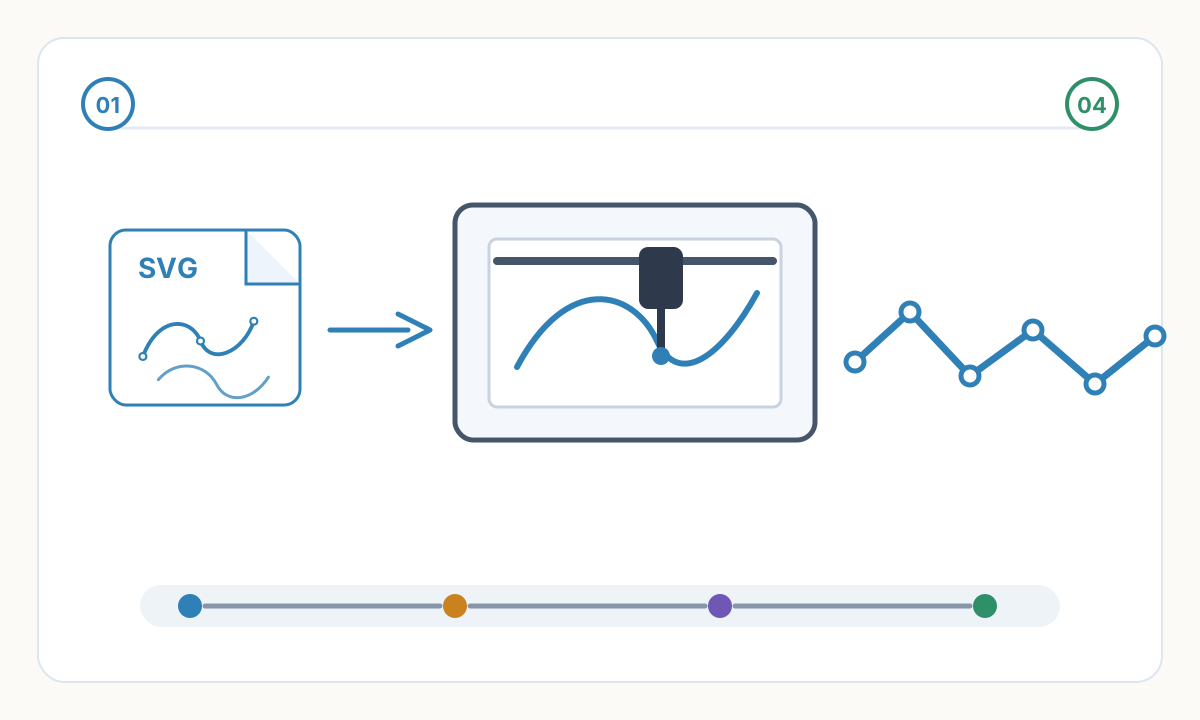
Connected lines and sane stroke order matter more than most people expect. Tools such as EggBot's Connect nearby ends and vpype's linemerge and linesort exist for a reason: pen-up travel can waste enormous time in hatch-heavy files.
- 5
Plot a Test Crop
Test the darkest patch, one mid-tone transition, and one detailed boundary at final scale. It is the fastest way to catch feathering, accidental double-dark areas, and edge problems before the full plot.
Quick Rules That Make Hatching Better
- White paper is part of the tonal range; do not fill everything.
- Use one hatch layer for most mid-tones.
- Reserve cross-hatching for the darkest shapes and accents.
- Make sure fill regions are closed before generating lines.
- Check holes, overlaps, and duplicate shapes before plotting.
- Prefer longer connected paths when the visual result is the same.
- Test the densest area on the final pen and paper, not just on-screen.
Pro tip
Keep a dated swatch library. Pen brand, nib size, paper stock, and spacing notes save far more time than trying to remember what worked six months ago.
Common Failure Modes
Most failed hatch plots come down to a small set of repeatable issues. Diagnose the symptom before you redraw the art.
- Muddy shadows: spacing is too tight for the pen, paper, or both.
- Flat form: the hatch direction fights the shape instead of supporting it.
- Messy edges: the region was open, not inset, or plotted with a pen that spreads more than expected.
- Slow plotting: the file contains too many isolated short segments, duplicate paths, or unnecessary second passes.
What spacing should I start with?
There is no single correct spacing. Start with a gap that still leaves individual strokes readable on your actual paper, then tighten only until you reach the darkest value you need. If the lines merge into a solid band or the paper starts to feather, back off or switch to a finer pen.
How many hatch layers are usually enough?
For most pen plots, one hatch layer handles light and mid-tones, and a second layer is enough for the deepest shadows. More layers can work, but they increase plot time quickly and often produce less useful contrast than expected on paper.
Can software turn a photo into hatching automatically?
Yes, but treat the result as a rough draft. The cleanest plots usually come from simplifying the image first, filling only closed shapes, and then reviewing spacing, edges, and stroke order before plotting.
Which tools are actually useful for this?
For editable vector hatching, Inkscape's Hatches live path effect is useful. For hatch or cross-hatch fills on selected closed objects, EggBot Hatch Fill is dependable. If your workflow already uses LightBurn, its Fill and Cross-Hatch options are precise for closed shapes. For cleanup and optimization, vpype is built for plotter-ready vector graphics.
Need a clean base drawing before you hatch it?
Start with a cleaner SVG, then add hatch only where it helps the final plot.
Get a Plotter-Ready SVG
Comments
Loading comments...